The Holmes D36 (NBR Class L) 4-4-0 Locomotives
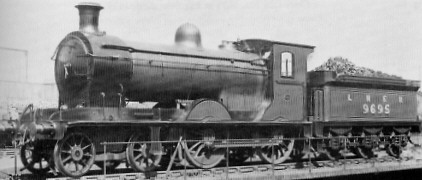
North British Railway (NBR) Class L (LNER D36) consisted of one engine: NBR No. 695 (LNER No. 9695). This started life as a Holmes NBR Class N (LNER D35) 'West Highland bogie' built in 1894. Noted for their poor performance and reputation, Reid subjected No. 695 to a trial rebuild in 1919. Compared to most NBR rebuilds, the rebuild was significant and included a new superheated boiler, new cylinders, new frames, and a new cab. The rebuild brought the resulting locomotive into line with modern Reid practices, and represented a significant improvement in performance over the original D35. However, No. 695 still lacked performance compared to Reid's own superheated 4-4-0s. Therefore it is not surprising that no further D35s were subjected to this expensive rebuild.
No. 695 was the only Holmes-built locomotive to receive a superheater. The boiler was of the type that became LNER Diagram 80 but included an 18-element Robinson superheater. This was the only Diagram 80 boiler to receive a superheater. Interestingly, after the boiler wore out in 1936, the LNER chose to exchange it with a succession of three saturated Diagram 80 boilers from class D31.
Despite receiving new frames in the 1919 rebuild, a stronger set of frames were fitted in September 1925. These frames can be recognised due to the fact that they were higher above the running plate.
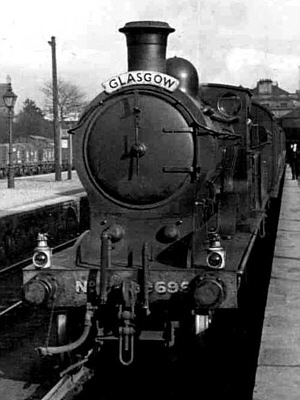
At the time of rebuilding, No. 695 was allocated to Parkhead. After the rebuild, it usually worked services from Bridgeton Cross to Helensburgh and Milngavie, and Saturday trips to Arrochar. In 1931 it was moved to Eastfield, to assist B12 4-6-0s on Oban excursions over the West Highland line. Although these and similar specials were only occasional duties during the summer, No. 9695 also found work on the passenger service from Queen Street to Kinross. After the outbreak of World War 2, No. 9695 was seen on more menial local duties in the Glasgow and Edinburgh areas. It was eventually withdrawn in May 1943. It was finally scrapped in February 1944, after being used during Air Raid Precautions (ARP) exercises.
Technical Details
| Cylinders (x2): | (inside) | 19x26in. |
| Motion: | Stephenson | |
| Valves: | 10in piston | |
| Boiler: | Max. Diameter: | 4ft 8.125in |
| Pressure: | 165psi | |
| Diagram No.: | 80 | |
| Heating Surface: | Total: | 1282.3 sq.ft. |
| Firebox: | 120.5 sq.ft. | |
| Superheater: | 220 sq.ft. (18x 1.1") | |
| Tubes: | 691.5 sq.ft. (142x 1.75in) | |
| Flues: | 250.3 sq.ft. (18x 5in) | |
| Grate Area: | 19.5 sq.ft. | |
| Wheels: | Leading: | 3ft 6in |
| Coupled: | 5ft 7in | |
| Tender: | 4ft 0in | |
| Tractive Effort: | (@ 85% boiler pressure) | 19,648lb |
| Wheelbase: | Total: | 43ft 6.25in |
| Engine: | 22ft 2in | |
| Tender: | 12ft 0in | |
| Weight (full): | Total: | 83 tons 1cwt |
| Engine: | 49 tons 11cwt | |
| Tender: | 33 tons 11cwt | |
| Max. Axle Load: | 17 tons 9cwt |
Preservation
The only D36 was withdrawn in 1943, and it did not survive into preservation.
Models
Connoisseur Models produce a brass kit of the D36 for O gauge (7mm scale).
Acknowledgements
Thank you to David Henderson for the photograph of LNER No. 9695 at Alloa station.